
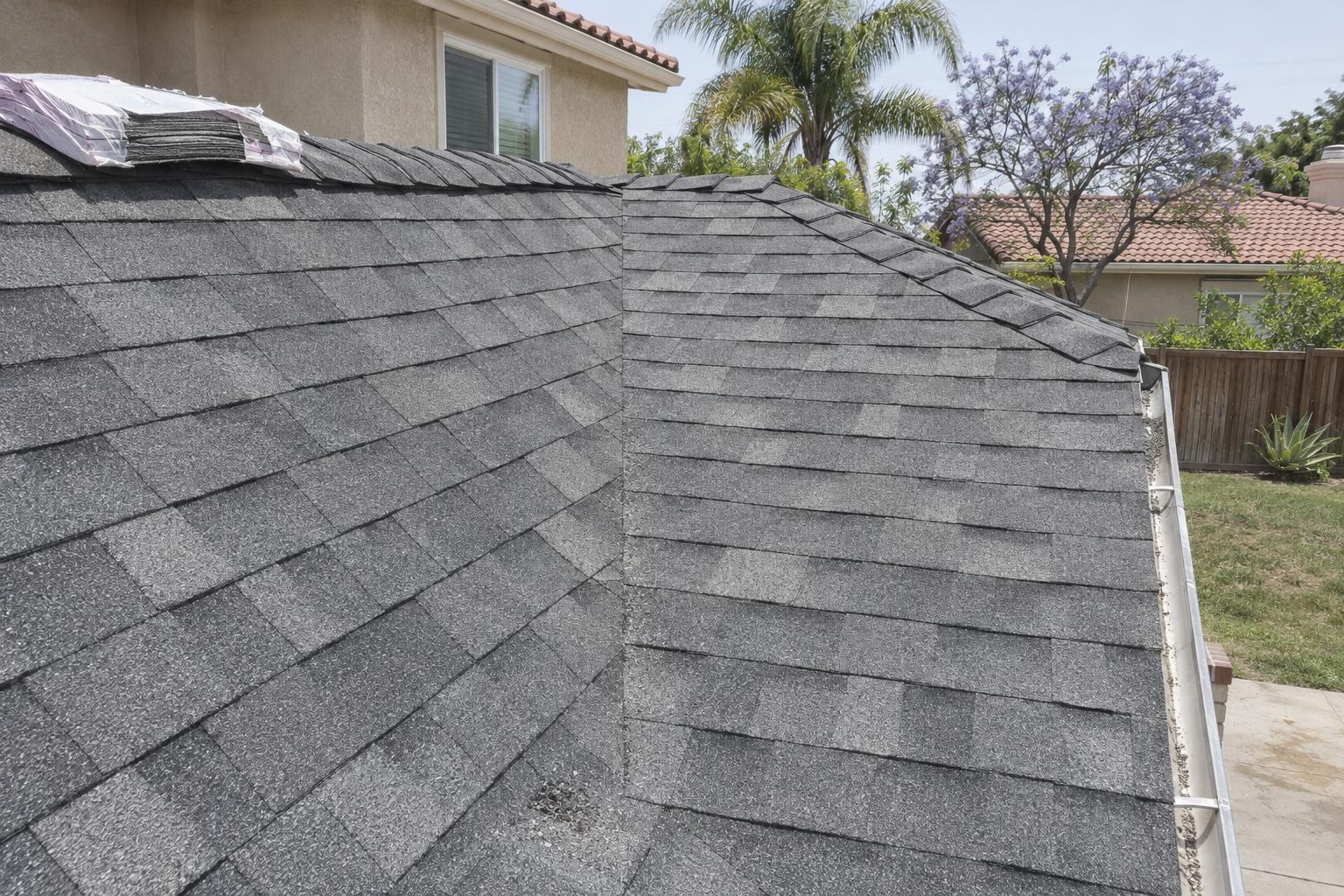
Most people don't think about their roof until water shows up on a ceiling or a wind event in October peels back a corner of shingle. By then you're picking a contractor under pressure, which is exactly when it's easiest to get talked into the wrong one. Here's what actually separates a solid roofer from someone who'll leave you with a bigger problem in three years.
Check the license, and check what it's licensed for
In California, roofing work needs a C-39 contractor's license through the CSLB. Anyone can tell you they're licensed. Look it up yourself on the CSLB site, it takes two minutes, and it tells you if the license is active, how long they've held it, and whether there's a bond and workers' comp coverage attached. No workers' comp means if someone falls off your roof, you're the one exposed, not them. That alone is worth the two minutes.
Ask for proof of liability insurance too, not just a verbal yes. A roofer who hesitates on this is telling you something.
A real estimate tells you what's under the shingles, not just the price
A lowball quote almost always skips something. The two things that quietly inflate a job, and that a cheap bid usually leaves out, are deck repair and underlayment grade. If your decking has soft spots from years of slow leaks, that plywood has to come out and get replaced before anything new goes down, usually priced per sheet once they open it up. A contractor who gives you one flat number without inspecting the deck first is guessing.
Underlayment matters more here than people think. Fifteen-pound felt is cheaper, but with West Covina summers regularly hitting the high 90s and the UV exposure that comes with it, synthetic underlayment or a heavier felt holds up longer under that heat before it gets brittle. Ask which one is in the bid.
A fair estimate also tells you tear-off versus overlay. Piling new shingles over old ones is faster and cheaper, but it traps heat, hides rot, and most manufacturers won't honor a warranty over a double layer. If a contractor offers overlay without mentioning the tradeoff, that's a flag.
What West Covina's conditions should show up in the quote
This area doesn't deal with freeze-thaw cycles, so that's not your enemy. Sun is. Composition shingle roofs here take a steady beating from UV from about May through September, and that accelerates granule loss faster than it would in a cooler climate. A lot of the housing stock in neighborhoods like South Hills and around Cameron Avenue dates to the 1950s and 60s tract boom, and those original roof decks are often 1x6 skip sheathing rather than plywood. A contractor who's worked this area knows to check for that before quoting, because it changes nailing and sometimes requires adding plywood over the skip sheathing to meet current code.
Clay and concrete tile roofs are common on the older and custom homes here too, and they need their own specialist. Walking on tile wrong cracks it, and a roofer used to composition shingle work who isn't careful on tile will leave you with a dozen hairline cracks you won't notice until the next rain.
Rainy season runs roughly November through March, and that's when every bad flashing job around a chimney or skylight shows itself. Santa Ana wind events in the fall are the other local stress test, strong enough to lift loose shingle tabs or shift ridge tile. A good contractor will mention flashing detail and fastening without you having to ask.
Permits aren't optional, and the inspection protects you
A re-roof in West Covina generally requires a permit through the city's building division, and a full tear-off almost always triggers an inspection of the decking before new material goes on, plus a final inspection once it's done. This isn't paperwork for its own sake. The inspector is checking nailing pattern, flashing at penetrations, and ventilation, things that are invisible once the roof is finished and that cause leaks years later if skipped. If a contractor tells you permits aren't necessary or offers to skip it to save time, walk away. An unpermitted roof can become a real problem when you go to sell the house.
Red flags worth walking away from
- Someone who knocks on your door right after a windstorm or hailstorm claiming they "noticed damage" from the street.
- Anyone asking for full payment upfront. A deposit is normal. The whole amount before work starts is not.
- A quote with no mention of decking, underlayment type, or ventilation, just a single price for "new roof."
- No local address or a phone number that only gets answered by voicemail.
- Pressure to sign the same day. A roof is a five-figure decision most of the time. A legitimate contractor expects you to think about it.
Get at least two bids, and if the numbers are wildly different, ask the lower one what it's leaving out. Nine times out of ten the gap is in the deck prep or the underlayment, not in the shingles themselves.
What a good inspection actually covers
If you're not sure whether you need a repair or a full replacement, a proper inspection should include the attic, not just a look from a ladder. Dark streaking on rafters, daylight showing through boards, or a musty smell up there tells a different story than what you see from the ground. Attic ventilation matters too, since poor airflow bakes the underside of your roof deck from the inside during summer and can shorten the life of the shingles above it by years. A roofer who only walks the roof and skips the attic is giving you half an answer.
We've laid out a lot here, and most of it comes down to asking a few direct questions and checking a couple of things yourself before you sign anything. If you want someone to walk your roof and tell you straight what shape it's in, that's the kind of inspection and repair work we do at Ridgecraft Roofing Services.